What role can principal protected notes play in your retirement withdrawals?

What role can principal protected notes play in your retirement withdrawals?

Discover an approach that can help you plan your withdrawals while offering market-linked growth potential.

26th October 2026

It’s a classic dilemma for people nearing retirement or already retired: they need to be sure of having cash available at specific times, but still don’t want to rule out stock markets and their potential for growth. Principal protected notes could be a solution offering a happy medium for these two objectives. 

Find out why and how in the four points of this infographic.


[If you’d like to learn more about this financial tool first, take a look at this article.]
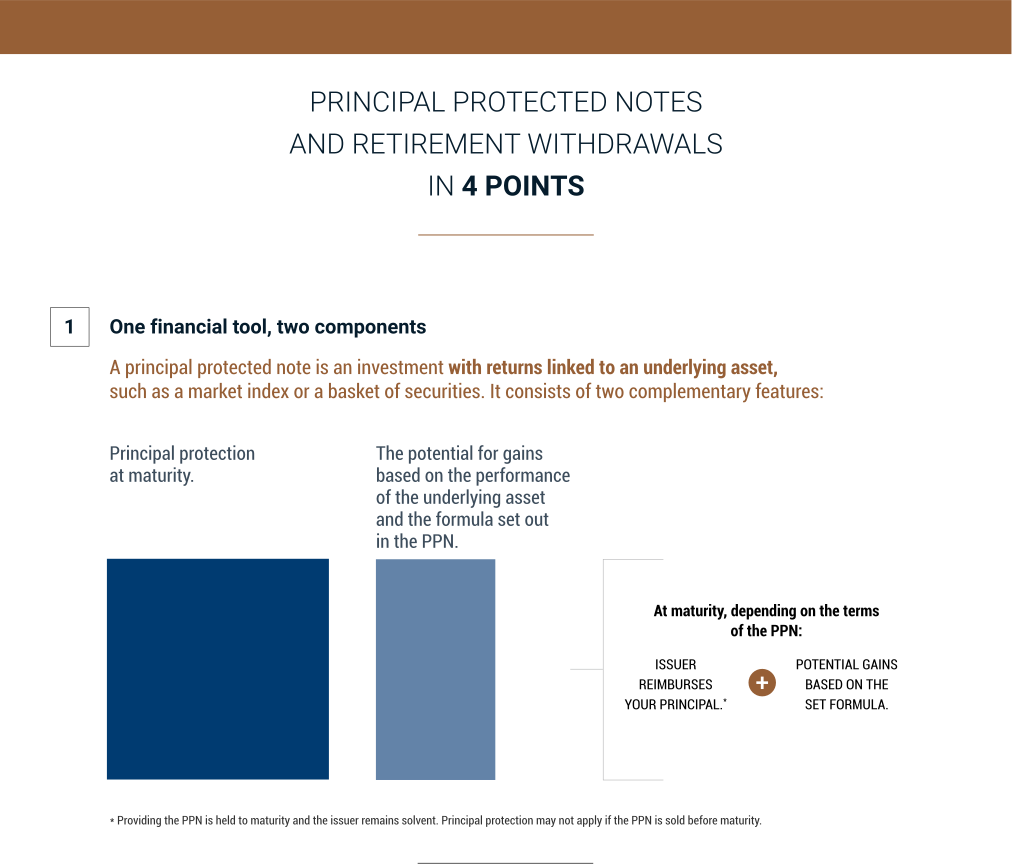
Infographic entitled “Principal protected notes and retirement withdrawals in 4 points.” The first point, “One financial tool, two components,” explains that a principal protected note is an investment with returns linked to an underlying asset, such as a market index or a basket of securities. The diagram is divided into two main blocks placed side-by-side. On the left, a large blue rectangle represents principal protection at maturity. On the right, a vertical green rectangle, narrower than the first one, represents the potential for gains based on the performance of the underlying asset and the formula set out in the PPN. Farther right, a small box summarizes what happens at maturity, depending on the terms of the PPN: the issuer repays the principal, and potential gains might be added based on the set formula. A note at the bottom specifies that principal protection applies if the PPN is held to maturity and the issuer remains solvent, and that it might not apply if the PPN is sold before maturity.
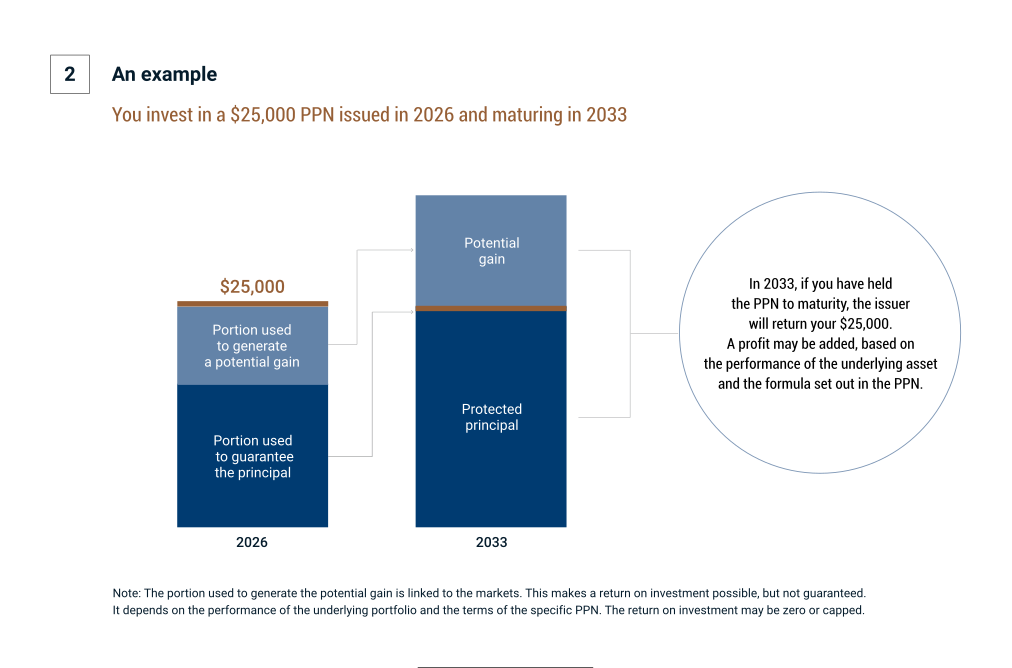
Diagram illustrating an example where $25,000 is invested in a principal protected note issued in 2026 and maturing in 2033. On the left is a column representing the PPN when the investment is made. It is divided into two sections: one portion used to guarantee the principal and one portion used to generate a potential gain. On the right, a second column represents the PPN at maturity. The lower section shows the guaranteed principal, while the upper section shows the potential gain. Two arrows link the starting components with the corresponding components at maturity. A box on the right explains that in 2033, if the PPN has been held to maturity, the issuer would repay the $25,000, and a return on investment might be added based on the performance of the underlying asset and the formula set out in the PPN. A note at the bottom specifies that the return on investment might be zero or capped.
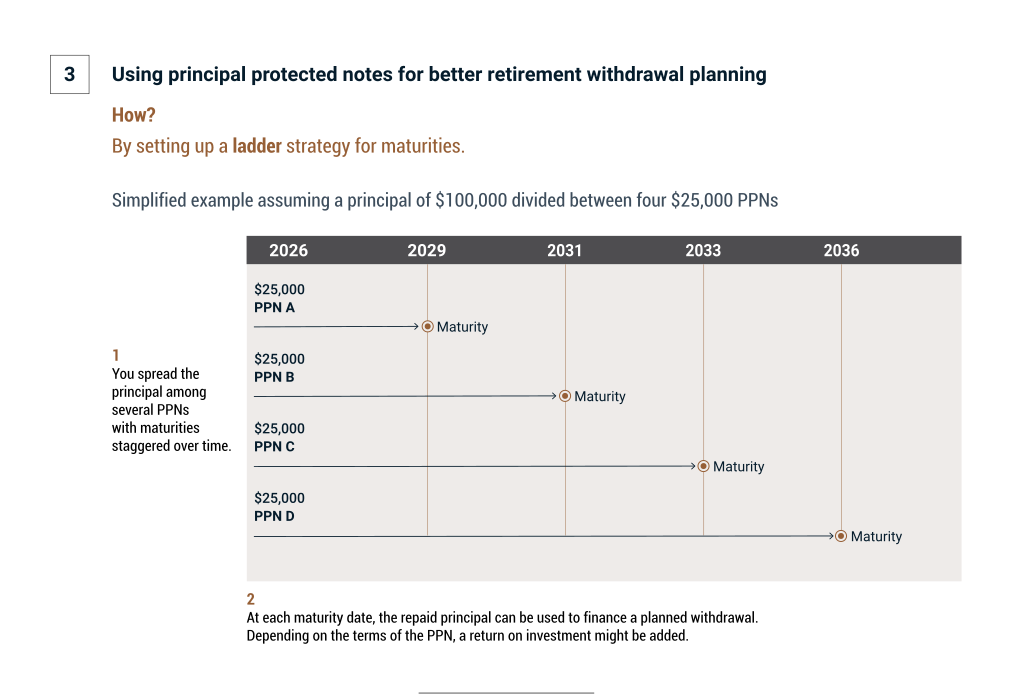
Diagram showing how PPNs can be spread over time to help with planning certain retirement withdrawals. The example assumes a total investment of $100,000 spread over four PPNs with a face value of $25,000 each. In the centre, a horizontal time line shows four maturity years: 2029, 2031, 2033 and 2036. On the left, the four PPNS, designated A, B, C and D, are shown in a vertical list. Each PPN is connected to its maturity year in the time line. PPN A matures in 2029, PPN B in 2031, PPN C in 2033 and PPN D in 2036. A box explains that the principal is spread among several PPNs with maturities staggered over time. A second box specifies that, at each maturity, the repaid principal can be used to finance a planned withdrawal, and that there might also be a return on investment, but this is not guaranteed.
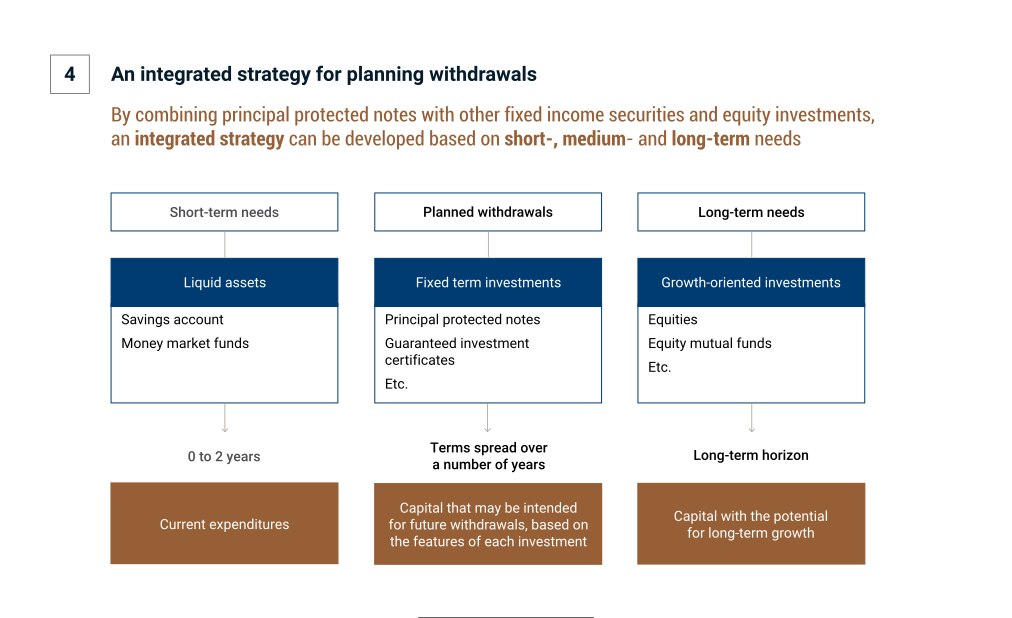
Diagram showing PPNs as a possible complement to other investment vehicles in a retirement withdrawal strategy. This image is organized into three columns. The first column, on the left, relates to short-term needs. It shows liquid assets, such as savings accounts and money market funds, associated with a 1- to 2-year investment horizon and with current expenditures. The second column, in the centre, relates to planned withdrawals. It shows fixed term investments, such as principal protected notes and guaranteed investment certificates, with maturities spread over a number of years. This column specifies that the capital may be intended for future withdrawals, based on the features and risks of each investment. The third column, on the right, relates to long-term growth. It shows growth-oriented investments, such as equities and equity mutual funds, generally with a long-term investment horizon. Overall, the diagram shows how different kinds of investments can meet specific needs based on the time frame.
End banner inviting those who are nearing retirement or already retired to  talk to their advisors to see if principal protected notes would be appropriate for their situation, investment horizon and withdrawal strategy.

Note : 
Mutual funds are distributed through SFL Wealth Management, a trade name used by Worldsource Wealth Management Inc., part of the Desjardins Group.