We have chosen for you. It’s not the right location? You can change it anytime.



Participating life insurance: building a sustainable legacy
An insurance solution that allows you to both protect and prosper.
February 19th, 2026
When you think “life insurance,” you are probably thinking mainly about protecting your loved ones in the event of your death. But you might also want the money invested in a policy to be available for… life. In other words, available to help you achieve things that matter to you: enjoying a rich and stimulating retirement, transferring wealth to the people you love, or anything else that might call for some cash from time to time.
So, what’s the story?
Life insurance with a plus
To begin with, participating life insurance is whole life insurance. This type of policy, designed for peace of mind, has a guaranteed, tax-free death benefit and remains in force as long as you continue to pay the premiums, no matter what the state of your health. The premiums are also guaranteed and level over time. Lastly, whole life insurance provides a guaranteed cash surrender value that you could potentially use to finance your retirement, complete a project, or discontinue your premium payments (which is known as “paid-up insurance”).
Along with these guaranteed features, participating insurance adds a unique component that can act as an accelerator: your participation in the financial surpluses generated by the insurer through the administration of policies. In fact, once the insurer has taken care of its obligations (payment of the death benefit, fees, taxes, etc.), it shares the net investment income generated with the policyholders: these payments are known as dividends. They are not guaranteed, but once granted they are permanently vested.
What can the dividends be used for?
Dividends are most commonly used to increase the policy’s paid-up insurance value. This can increase both the death benefit your loved ones will receive and your cash value, without increasing your premiums.
Conversely, the dividends can be used to lower your premiums while maintaining the existing death benefit and cash value. Or you can leave them to accumulate in the policy or withdraw them as cash, keeping in mind, however, that the tax effect of your dividends could be different depending on whether you leave them in the policy or withdraw them.
An attractive option: additional deposits
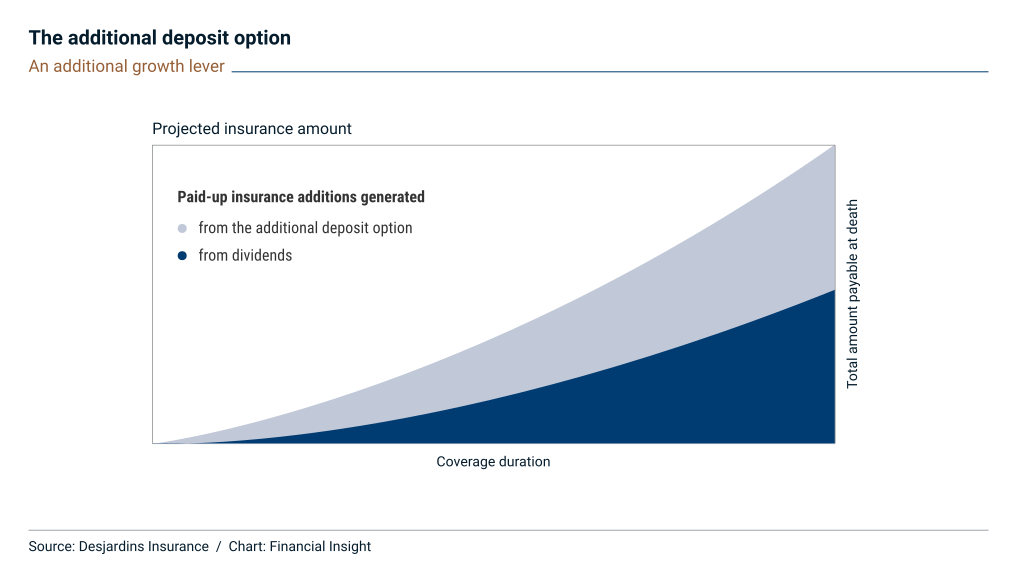
Some participating life insurance policies also include an option that can enhance this dynamic: the additional deposit option, or “ADO.” This approach allows policyholders to make voluntary deposits in addition to their basic premium payments. These can be one-time deposits, regular deposits, or a combination of both. As shown in the graph below, they make it possible to acquire additional paid-up insurance on top of that purchased with dividends, which can increase the tax-free death benefit even more without increasing your premiums.
Is it for you?
Participating life insurance offers three main advantages:
long-term value creation
tax-advantaged growth
flexible deposit options
It can be an especially interesting option for parents or grandparents, who have the choice of paying all the premiums over a certain number of years before transferring the policy to their children or grandchildren when they reach adulthood. It also offers several advantages for business owners, as it can help them manage the risk associated with the loss of a key person, minimize the tax impact of passive investment income, and provide additional cash flow for various projects, including retirement. Finally, it’s also popular with professionals, because it provides whole life insurance that combines flexibility, guarantees, and attractive policy values.
If this type of financial instrument interests you, your advisor will be able to explain all the terms and conditions and offer guidance in setting things up.
The following sources were used to prepare this article:
Autorité des marchés financiers, “Participating and non-participating whole life insurance.”
Desjardins, “Participating life insurance”; “Explorez nos produits d’assurance vie avec participation et notre option de dépôt supplémentaire.”
Investopedia, “What Is a Participating Policy? Definition and How It Works ».
PolicyAdvisor, “What is a participating life insurance policy?.”
XpertSource, “Tout savoir sur l’assurance vie avec participation ».