We have chosen for you. It’s not the right location? You can change it anytime.



Discover 3 essential ingredients for making your wealth grow
A long-term savings strategy should be based on three pillars. Do you know what they are?
March 25th, 2026
The quest for the highest return consistent with your risk tolerance profile is at the heart of any investment strategy. But did you know that your return on investment isn’t the only ingredient for success.
The following three graphs demonstrate why.*
Ingredient 1: Time
Time is the investor’s best friend. The number of years that your assets are invested can make a substantial difference to the wealth you can accrue over the long term – in particular to provide you with your desired retirement income.
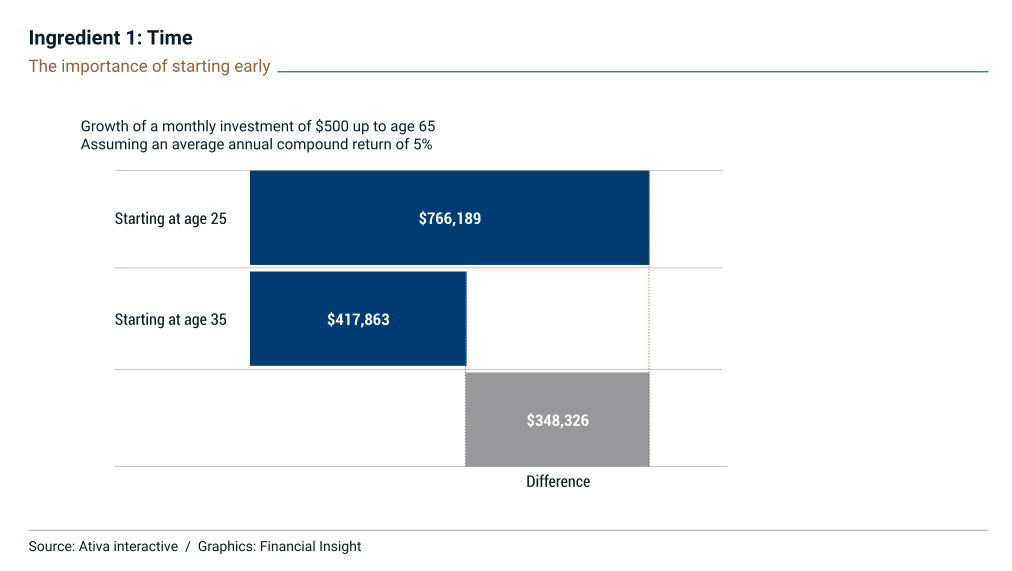
Suppose that you were to invest $500 a month in your registered retirement savings plan (RRSP) and that you got an average annual compound return of 5%.
By starting early in your career, at age 25, you could end up with over $766,000 by the time you turn 65.
But if you waited until age 35 to start saving, you would find yourself with $348,000 less.
The logic at work here is the compounding effect: because your annual returns are added to those of each preceding year, your assets grow exponentially and every year counts. And if you were late getting started? By planning to keep on saving for longer – continuing beyond age 65, for example – the compounding effect could still work to your advantage.
Ingredient 2: Disciplined saving
It might seem obvious, but building wealth starts with healthy saving habits. In this respect, saving a little extra each month or each year can produce significant results over the long term.
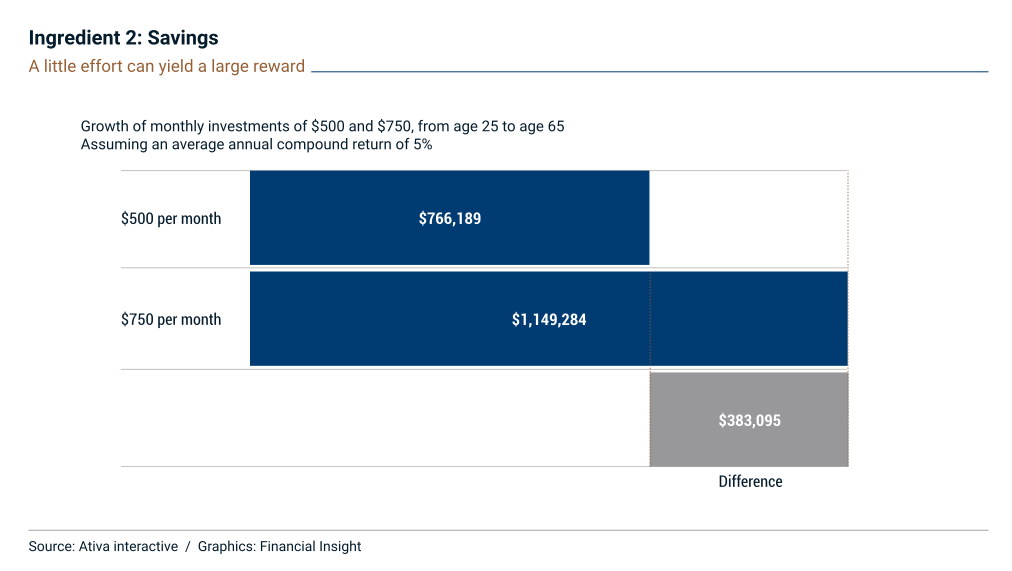
For example, let’s say that you are 25 years old and have decided to put $500 a month into your RRSP (with the same performance assumption as before). Now suppose that you are able to increase your monthly contribution to $750. This difference of $250 a month could translate into additional wealth of about $383,000 by age 65, and this would push your assets to over a million dollars by the time you retire.
Ingredient 3: Return on investment
But where are the returns in all this? While they alone are not usually enough to ensure the strategy’s success, they are still an essential ingredient in the recipe.
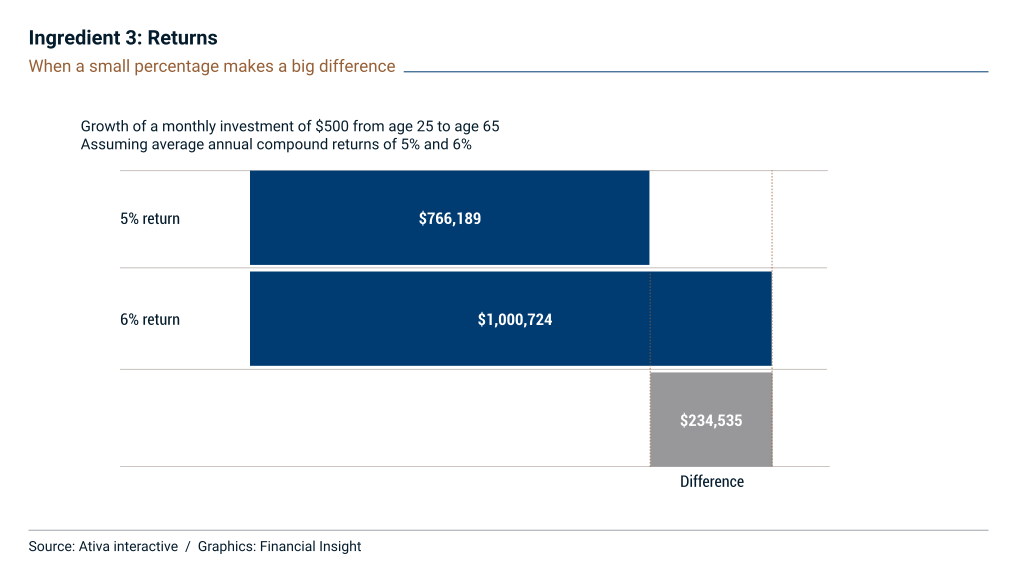
In this third example, let’s look at a monthly RRSP contribution of $500, keeping the duration the same as before.
In the first case, the average annual compound return is assumed to be 5%.
In the second, the return is increased to 6%.
As we can see, this additional 1% return translates into an increase in capital of about $235,000. It, too, would allow you to top a million dollars in assets by age 65.
In a long-term strategy, this kind of increase could typically be achieved by accepting a higher risk level.
1 + 2 + 3
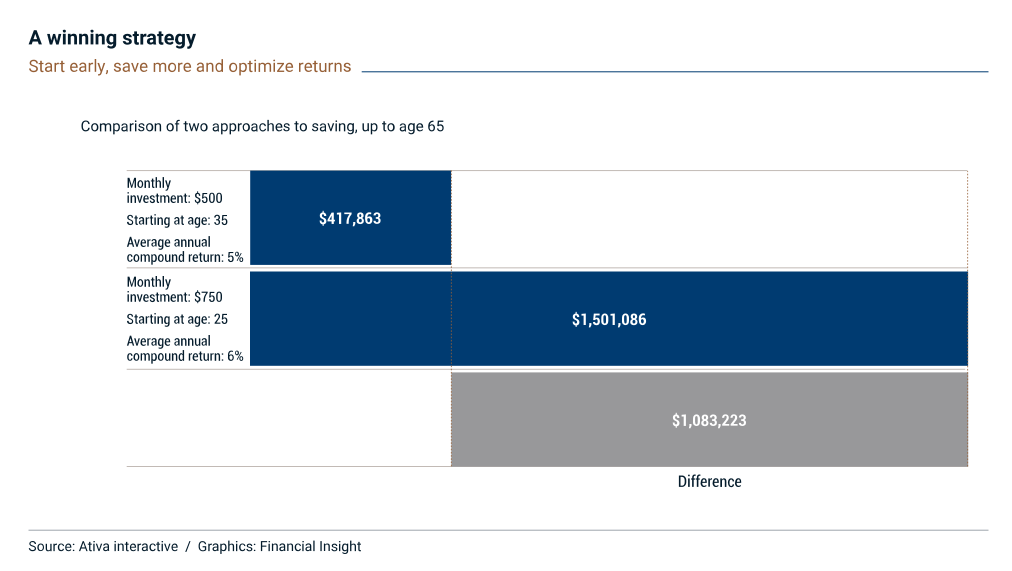
Here is one last example that combines all three ingredients: a longer investment horizon, slightly higher contributions and slightly better returns. The impact becomes even larger: using the same assumptions as before, the difference at age 65 could amount to over a million dollars.
How to do it?
As can be seen, judiciously tweaking your investment approach can produce some attractive long-term results. Your advisor can help you implement the techniques suitable for your situation while keeping an eye on other factors, especially how your investment income is taxed if you invest through non-registered accounts (see this article to learn more).
In any case, never hesitate to have a chat with your advisor.
* Important notes
All examples are for illustrative purposes only and do not account for inflation, taxation or annual market fluctuations.
The returns used in the examples are hypothetical and do not in any way guarantee future performance.
RRSP withdrawals are taxable
The following sources were used to prepare this article:
Ativa Interactive, “Compare Two RRSPs Calculator".
Business Insider, “Every 25-Year-Old In America Should See This Chart.”
CIRO-OCRI, “Understanding Investment Performance / Returns.”
Federal Reserve Bank of St. Louis, “How Does Compound Interest Work?”
La Presse, “L’obsession du rendement.”
U.S.News, “11 Charts Showing Why You Should Invest Today.”